
Publications and Awards
My full publication list is available on:
Paper highlights
Click any entry to expand it.
Broekgaarden et al. 2026 — A Practical Primer on Software Citation in Research Sep 25, 2026
Floor S. Broekgaarden, Phil R. Van-Lane, Sasha Levina, Ahmed Bello, Sandra Gesing, Daniel S. Katz, Bhavesh Patel, Pengyin Shan, Samantha Teplitzky, Simon Thill, Peter K. G. Williams, and Andrea Zonca
arXiv:2609.28622
Software underlies virtually all modern research, yet citation practices for software remain inconsistent and often inadequate. This short primer offers guidance for (early-career) researchers on how to properly cite the software you use in your research, and how to make your own software easy for others to cite — with astronomy examples. It lays out a seven-step workflow for citing software and a five-step workflow for making your software citeable, along with the community tools and resources that support each step.
Our goal is to lower the barrier to good software citation practice and to support a research culture in which software receives the scholarly credit it deserves! Thanks to NASA HPOSS and TWSC support for making this work possible.
Grondin et al. 2026 — A Framework for Linking Pre- and Post-Common Envelope Binary Properties with Star Clusters: The First Demonstration with a Massive White Dwarf+M Dwarf Binary in Alessi 12 Jul 24, 2026
GW Paleontology group member Steffani M. Grondin's monumental common-envelope paper just hit the arXiv! This was a big team effort: Steffani M. Grondin, Maria R. Drout, Jason Nordhaus, Philip S. Muirhead, Bailey Filer, Alexander Laroche, Jeremy J. Webb, Floor S. Broekgaarden, Ryan Chornock, Kyle Kremer, Natalie LeBaron, Raffaella Margutti, Nikki Noughani, Huei Sears, and Pier-Emmanuel Tremblay
arXiv:2607.20611
One of the most important — and least understood — chapters in the life of a binary star is common-envelope (CE) evolution: the brief phase when one star swells up, engulfs its companion, and the two spiral together inside a shared envelope of gas. It is thought to be crucial for bringing binaries close enough that they can eventually merge later in life. But because it is so short-lived, it has been extraordinarily difficult to catch in the act or to constrain observationally — which is exactly why it remains one of the biggest uncertainties in the field.
In this gigantic effort, Steffani collected an enormous amount of data on the post-common-envelope system Alessi 12–PCE, using many different telescopes, and developed a new framework for recovering CE information from the detailed orbital properties of a system that has already been through the CE phase. The key trick: because this binary lives in the star cluster Alessi 12, its age, distance, and chemical composition are pinned down by the cluster, giving a wealth of extra information that isn't available for isolated field binaries.
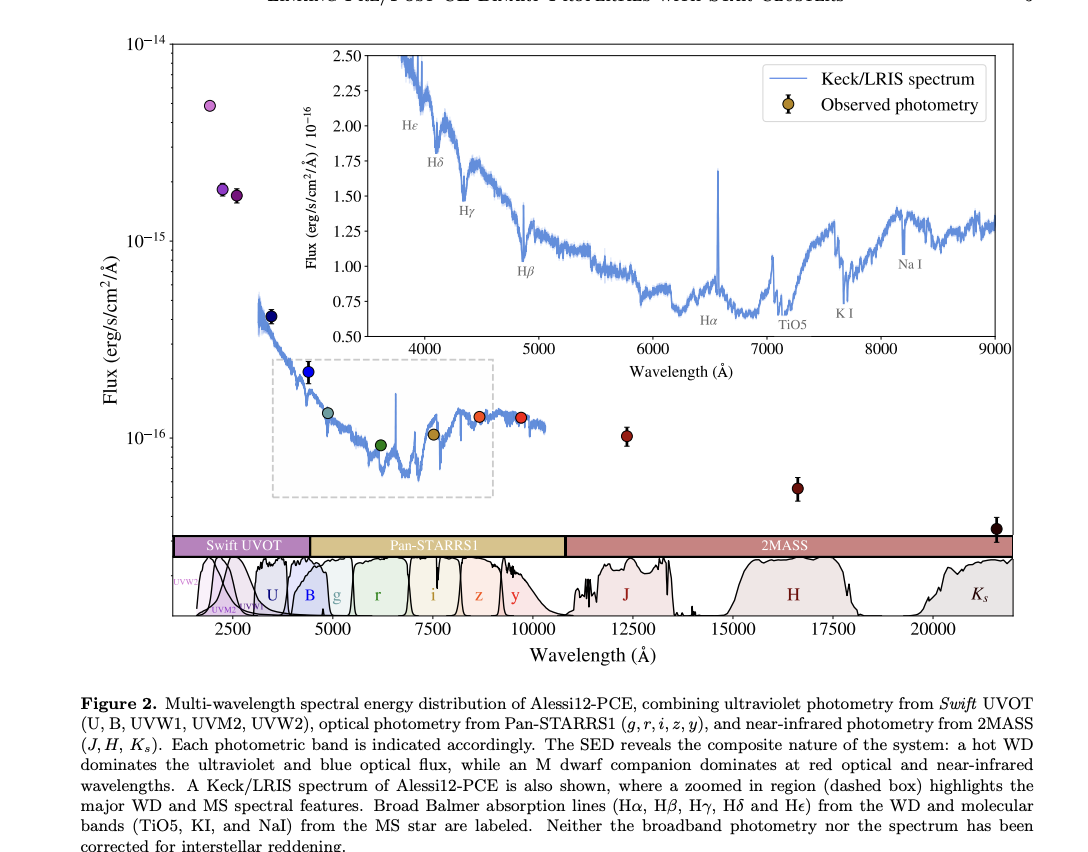
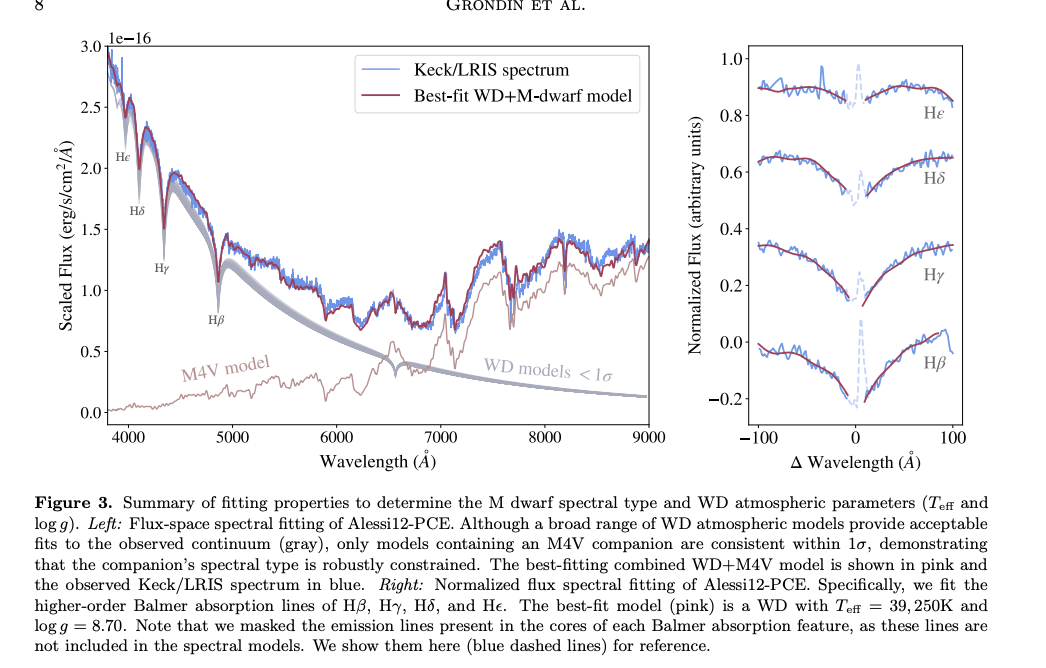
The team characterized the system in remarkable detail — identifying an M4V companion orbiting an unusually massive white dwarf of 1.06 ± 0.02 M☉ (the most massive such WD+M dwarf binary known in a cluster) on a tight 6.99-hour orbit confirmed by radial-velocity measurements.
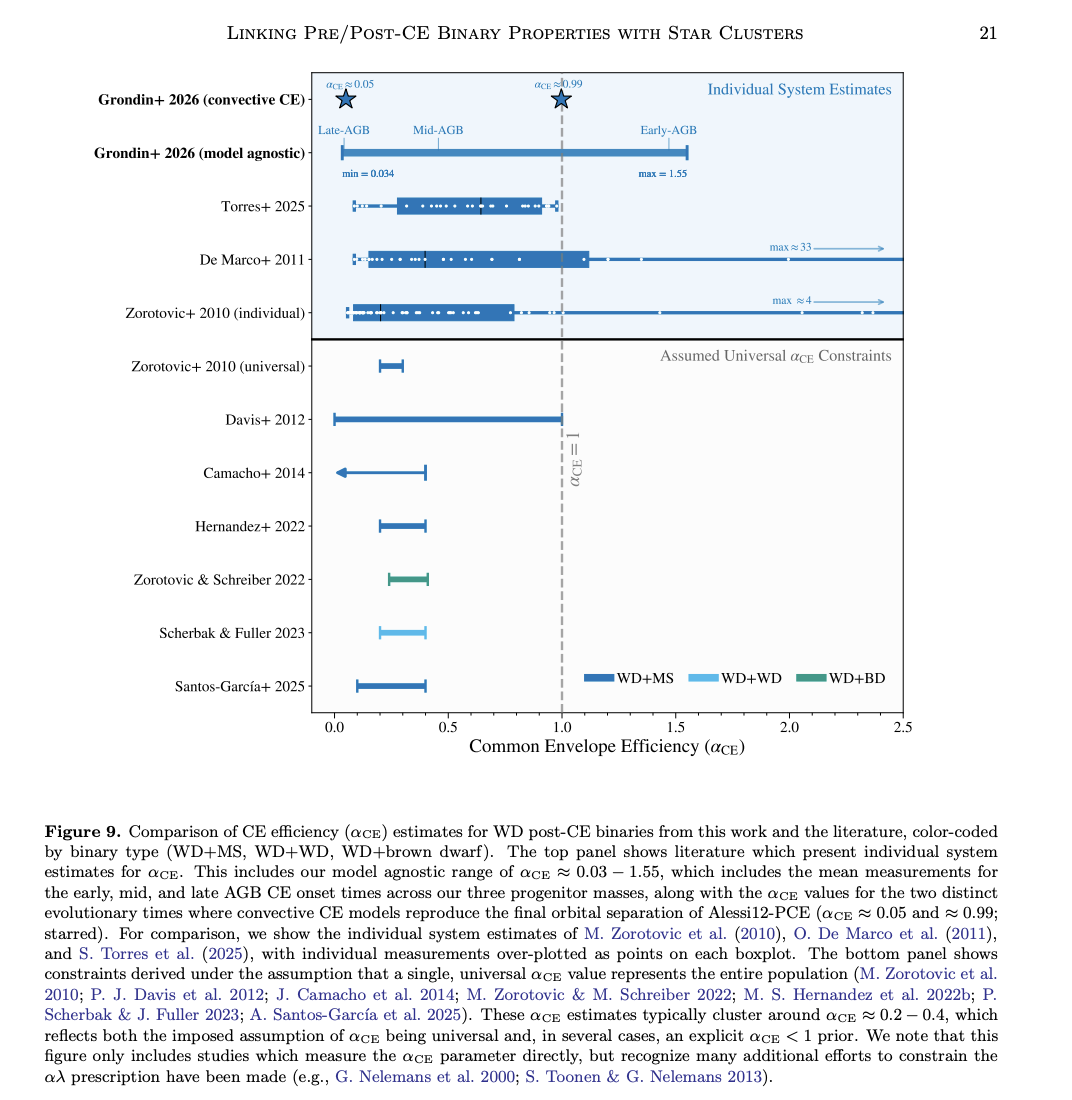
Feeding these measurements into the framework yields a striking result: CE models in which convection is the dominant physical mechanism that sets the efficiency parameter αCE reproduce the observed orbital separation in either a mid-AGB interaction with αCE ≈ 0.99, or a late-AGB interaction with αCE ≈ 0.05. That's a surprisingly wide range of possible CE efficiencies, and exactly the kind of empirical anchor that theorists modeling these systems have been missing.
The really exciting part is what comes next: now that this framework works, it can be applied to other post-CE systems in clusters going forward — steadily chipping away at one of the most mysterious phases in binary stellar evolution.
Broekgaarden 2026 — Lower Your Rates: On Claims of a Binary Black Hole Merger-Rate Crisis Jun 29, 2026
Floor S. Broekgaarden
arXiv:2606.28515
Explore the data and results yourself with interactive figures and tables: [interactive figures]
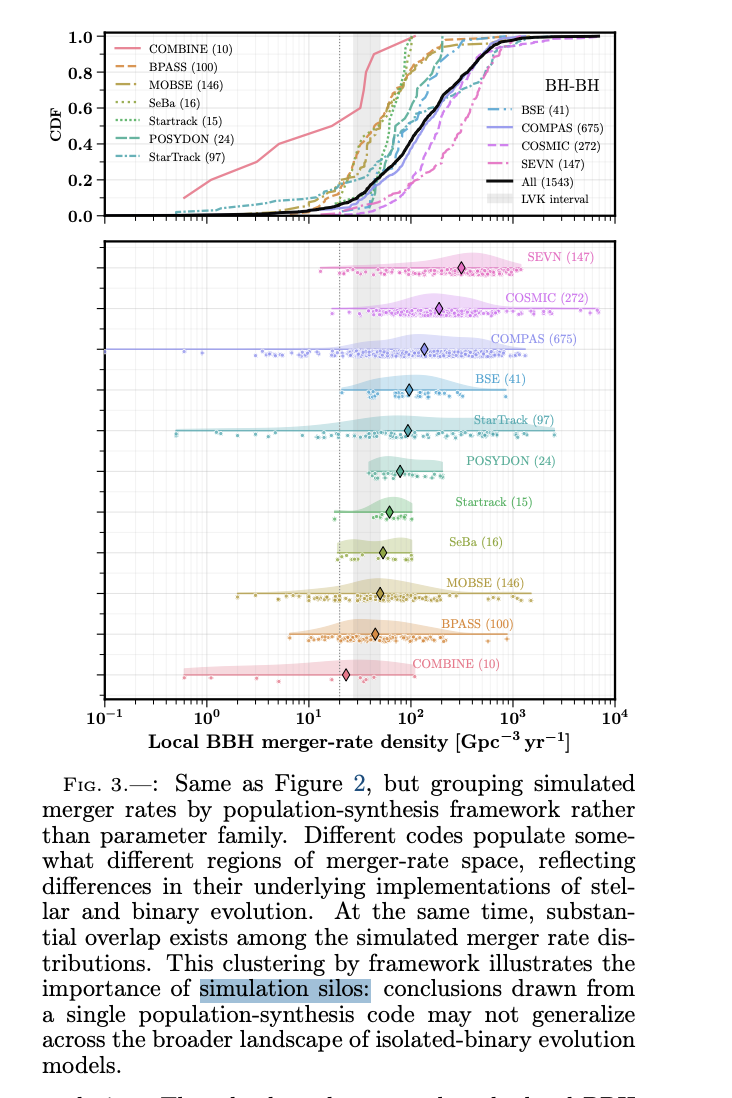
It has recently been suggested that isolated binary evolution models systematically overpredict the binary black hole (BBH) merger rate, and that the only way to bring simulations down to — or below — the rate observed by LIGO, Virgo, and KAGRA (GWTC-5) is to invoke high-metallicity star formation or high black hole natal kicks. This paper asks whether that is actually true. It is not.
To test this, I updated and greatly expanded the 2022 rates review, compiling metadata for each simulation and submodel from isolated binary evolution that reports a BBH merger rate — 1,490 simulated merger rates drawn from 57 studies. While most models do exceed the observed rate, a meaningful subset aligns with or falls below it, and crucially those low rates arise from many different, physically justified parameter variations — not just high metallicity or strong kicks. Simulated rates depend heavily on assumptions about natal kicks, common-envelope evolution, mass transfer, and star formation history, and low BBH rates can be reached along multiple independent routes through that parameter space.
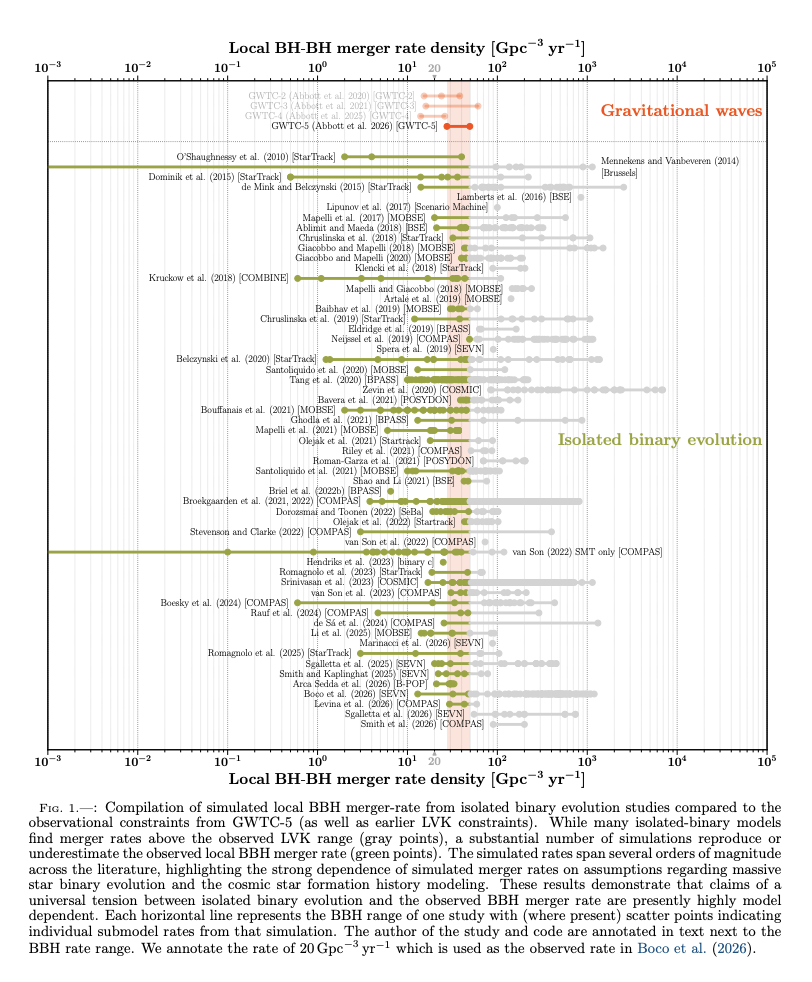
A central finding is the appearance of simulation silos: individual computational frameworks show internal consistency that does not extend across different codes, so trends found within one framework do not straightforwardly generalize. The overall conclusion is that claims of a universal BBH merger-rate "crisis" are strongly model dependent, and that much broader parameter-space exploration is needed before declaring genuine tension between binary evolution theory and gravitational-wave data.
Broekgaarden et al. 2026 — How Common Are Common Envelopes? Quantifying Their Role in Forming Gravitational-Wave Sources Jun 4, 2026
Excited that my paper is out! This was a team effort: Floor S. Broekgaarden, Ana Lam, Sasha Levina, Jakub Klencki, Kyle A. Rocha, Lieke van Son, Steffani M. Grondin, Monica Gallegos-Garcia, Brian D. Metzger, Enrico Ramirez-Ruiz, Angela Twum, Melanie Santiago, Julia Haynes, Tyler B. Smith, Amedeo Romagnolo, Edo Berger, and Lucas M. de Sá
arXiv:2606.05322
All data and results are publicly available with interactive figures and tables you can explore yourself: [interactive catalog]
One of the most consequential — and most uncertain — phases in the life of a binary star system is common-envelope (CE) evolution. When one star grows large and engulfs its companion, the two stars spiral together inside a shared gas envelope. If the system survives, the orbit shrinks dramatically, setting up the binary to eventually merge as a pair of compact objects detectable by LIGO, Virgo, and KAGRA. If it doesn't survive, the binary is destroyed. CE evolution is therefore a critical bottleneck in forming gravitational-wave sources — yet after decades of study, we still don't fully understand it.
This paper asks a deceptively simple question: is CE evolution actually required to form the binary black holes, neutron stars, and black hole–neutron star systems that gravitational-wave observatories detect? Rather than picking a single simulation and reporting its answer, we compiled and compared predictions from over 200 population-synthesis simulations spanning many different codes and physical assumptions, and asked what fraction of merging systems in each simulation formed through a CE phase.
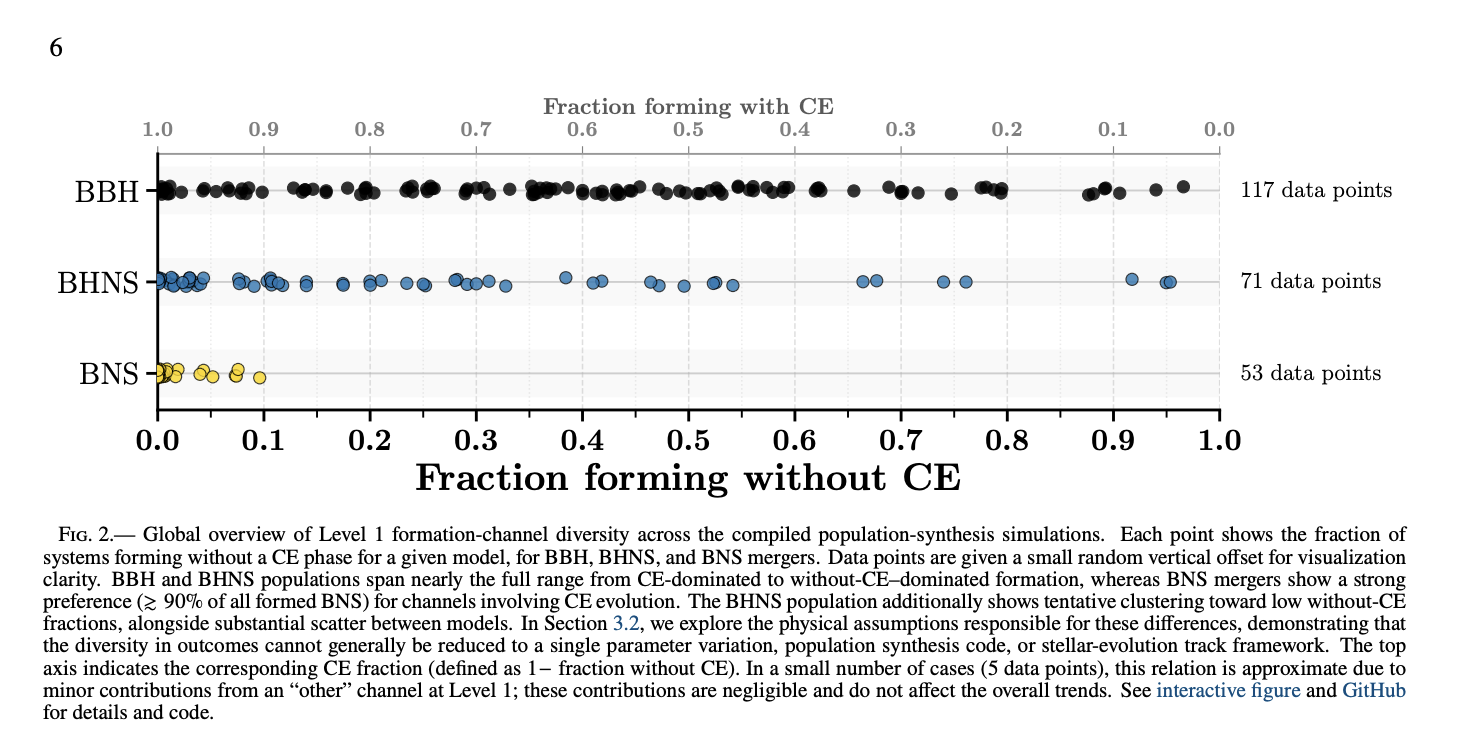
The headline result (Figure 2) is striking: for binary black holes and BH–neutron star systems, the simulations span nearly the full allowed range — from models where essentially every merger formed through a CE phase to models where none did — yet these same models all produce similar merger rates consistent with current LVK observations. This reveals a fundamental degeneracy: merger rates alone cannot tell us how these systems formed. We can match the data with completely opposite physical assumptions about CE evolution.
Binary neutron stars tell a very different story. Across essentially all models, BNS mergers form almost exclusively through channels involving at least one CE phase (≳90–100%). This makes BNS systems a much more powerful probe of CE physics — if we can measure their merger rates and mass distributions precisely enough, we can potentially break the degeneracy that plagues the BBH population.
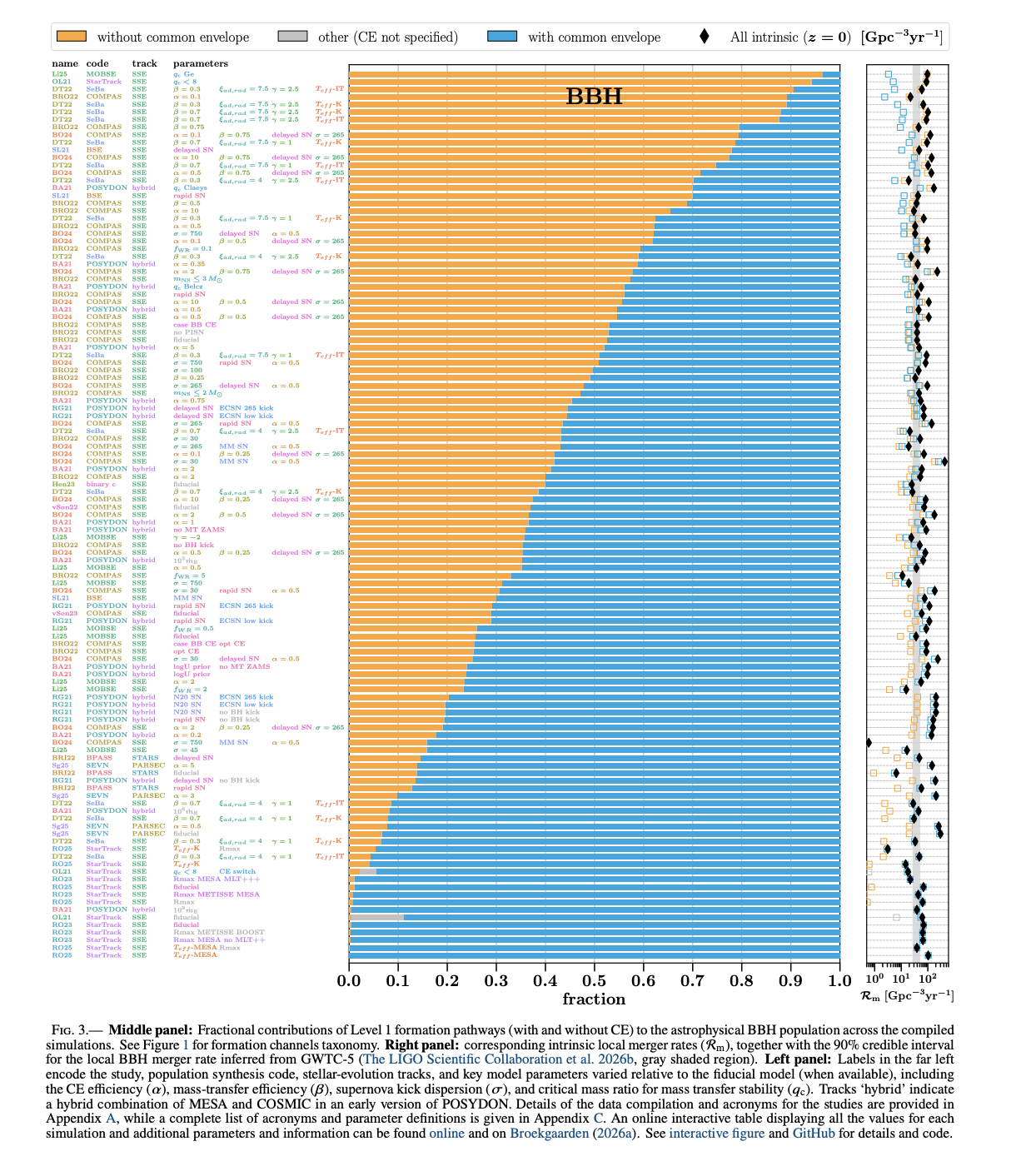
Figure 3 makes the diversity explicit: sorted by CE fraction, the simulations fill essentially every possible value from 0 to 100%, and the accompanying merger rate (right panel) shows no strong trend. You can predict almost any CE fraction and still match the observed BBH rate. The diversity is driven by a handful of key assumptions — mass-transfer stability, angular-momentum loss, CE efficiency, and supernova natal kicks — but these parameters interact non-linearly and in correlated ways across different simulation codes and frameworks. This means that trends found by varying one parameter at a time within a single code don't straightforwardly generalize to the full landscape of models.
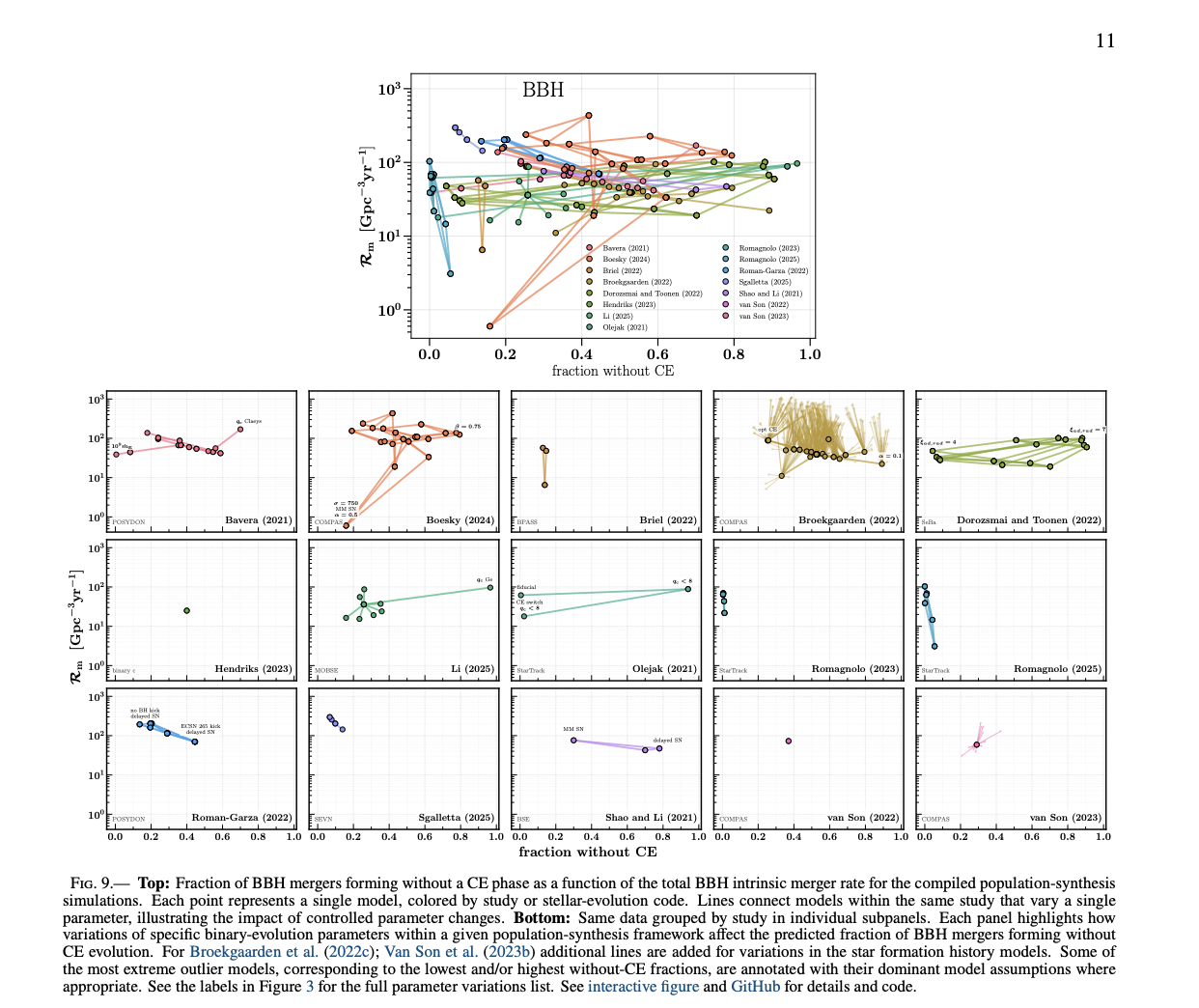
The bottom line is that we need to go beyond merger-rate measurements alone. Multi-messenger observations, mass and spin distributions, delay-time distributions, and eventually electromagnetic counterparts will all be needed to break the degeneracy and constrain what CE evolution actually looks like. The interactive catalog accompanying this paper is designed to make it easy to explore the full simulation landscape and identify which observables are most diagnostic. There is much more work to do here — but this paper is intended as a community resource to anchor those future efforts.
Smith et al. 2026 — Massquerade: Impacts of Mass Ratio Reversals on Binary Black Hole Merger Rates and Mass Distributions May 20, 2026
Tyler B. Smith, Floor Broekgaarden, Sasha Levina, Amedeo Romagnolo, Manasvini Komandur, Melanie Santiago, Kyle A. Rocha
arXiv:2605.21580
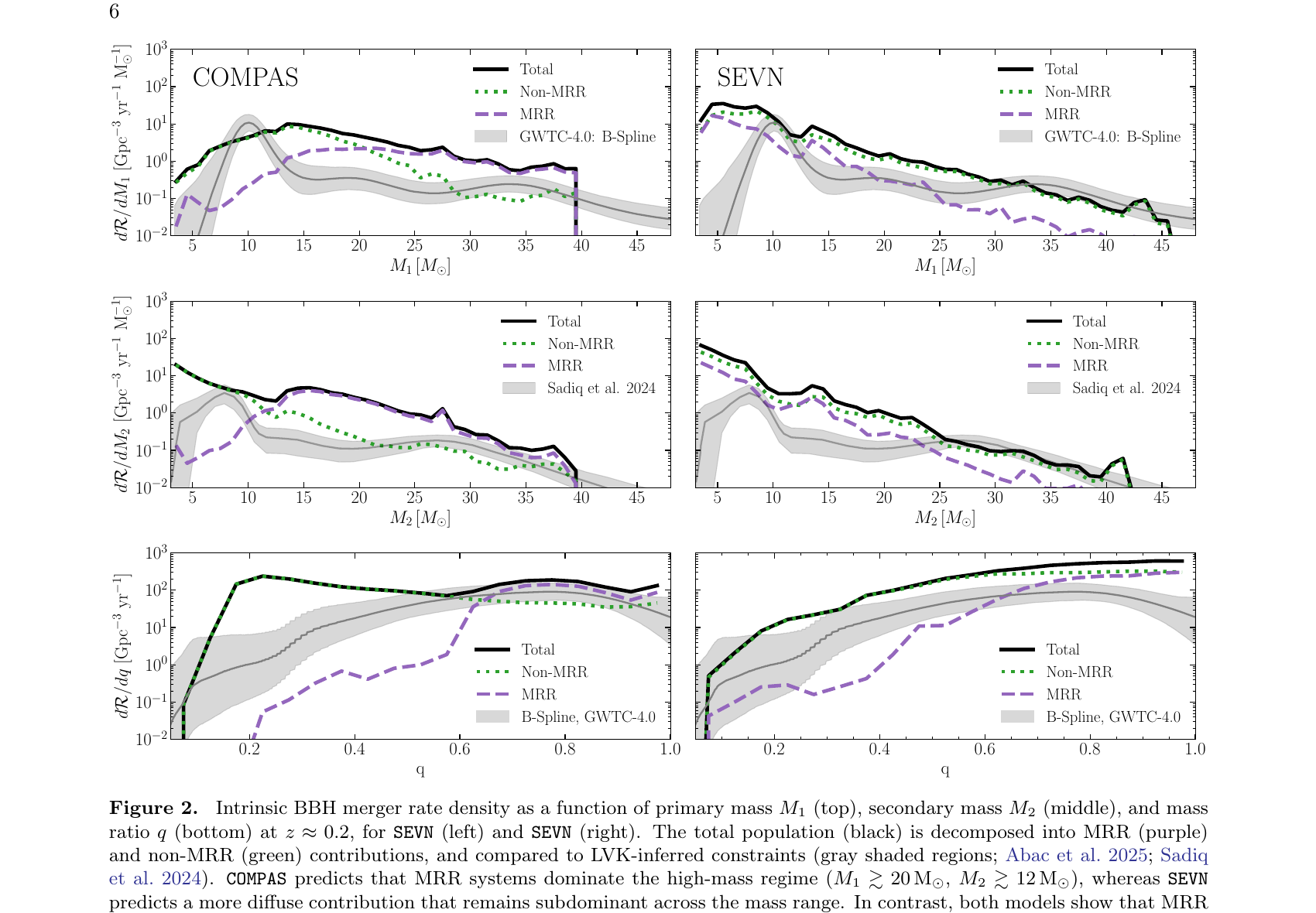
When two massive stars are born together in a binary system, the heavier star is expected to also produce the heavier black hole when it dies. But binary evolution can flip this expectation. Through a process called mass ratio reversal (MRR), the initially less massive star can end up forming the more massive black hole. This happens when mass is transferred between the stars during their lives — the lighter star receives material from its companion, grows a more massive core, and ultimately collapses into a heavier black hole than the one formed by the originally dominant star. The initially less massive star is then "massquerading" as the primary.
This paper investigates how common MRR is, and — crucially — how it shapes the black hole merger rate and mass distributions that gravitational-wave observatories like LIGO, Virgo, and KAGRA actually measure. The team uses two independent binary population synthesis codes, COMPAS and SEVN, to simulate large populations of binary stars from birth through to black hole merger, and compares the resulting distributions against current LVK observations.
A key finding is that the two codes make qualitatively different predictions. In COMPAS, MRR systems dominate the high-mass end of the distribution (primary masses above ~20 M☉, secondary masses above ~12 M☉), while in SEVN the MRR contribution is more diffuse and remains subdominant across the full mass range. Despite this difference, both codes agree that MRR systems preferentially populate the high mass-ratio regime (q ≳ 0.6, meaning the two black holes have similar masses). The upshot is that the observed mass distribution cannot simply be read as a direct map of the original stellar masses — MRR blurs that connection.
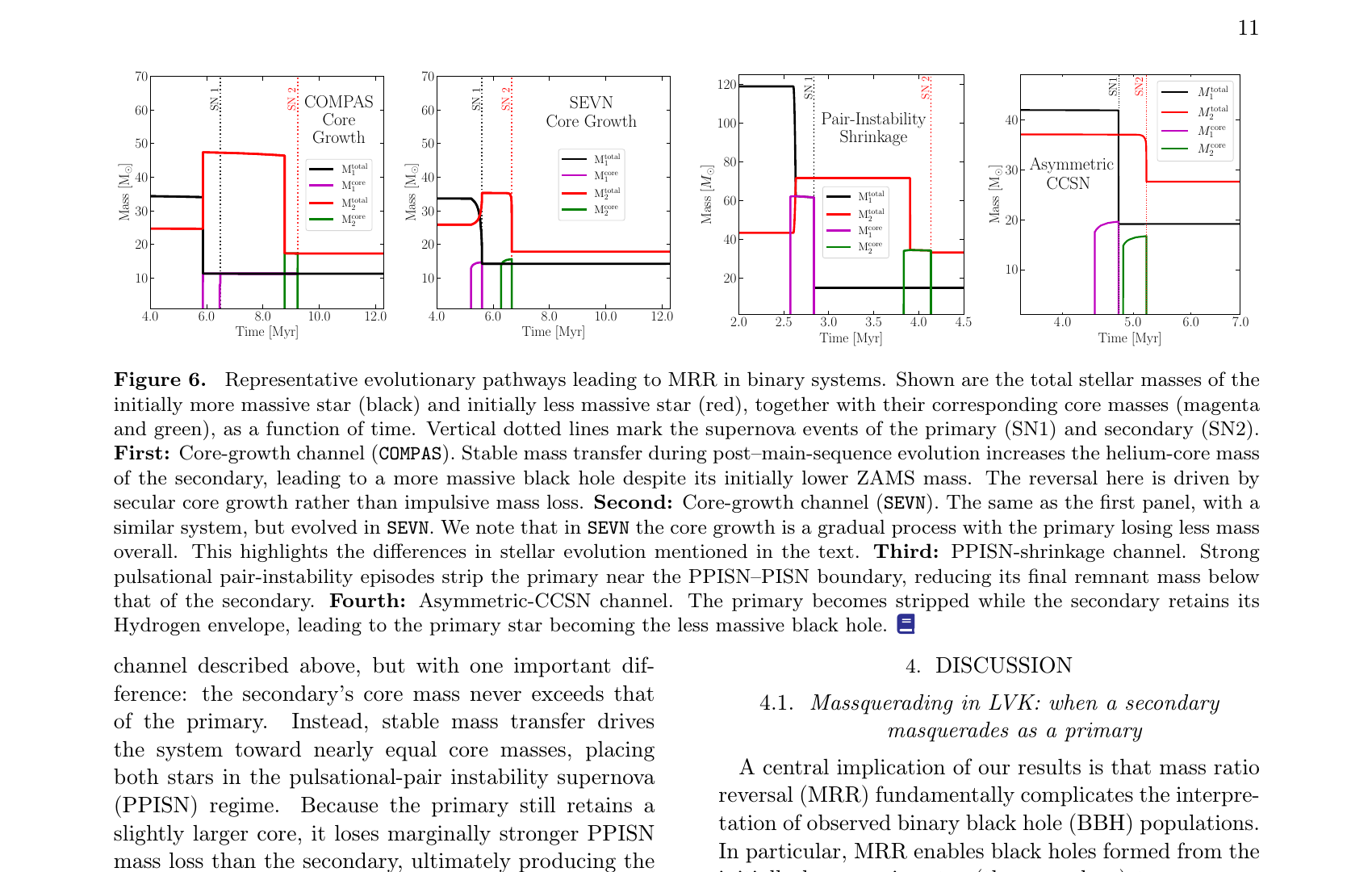
The paper also identifies three distinct evolutionary channels that produce MRR (Figure 6 below): (1) core growth, where stable mass transfer fattens the secondary's helium core until it collapses into the heavier black hole; (2) PPISN shrinkage, where the primary loses mass through violent pulsational pair-instability episodes and ends up lighter than the secondary; and (3) asymmetric core-collapse supernovae, where differential stripping leaves the secondary with a heavier remnant.
Levina et al. 2026 — From cosmological simulations to binary black hole mergers: The impact of using analytical star formation history models on gravitational-wave source populations January 28, 2026
Sasha Levina, Floor Broekgaarden, Lieke van Son, Emanuele Berti, Amedeo Romagnolo, Ruediger Pakmor, Ana Lam
arXiv:2601.20202 · ApJ (published)
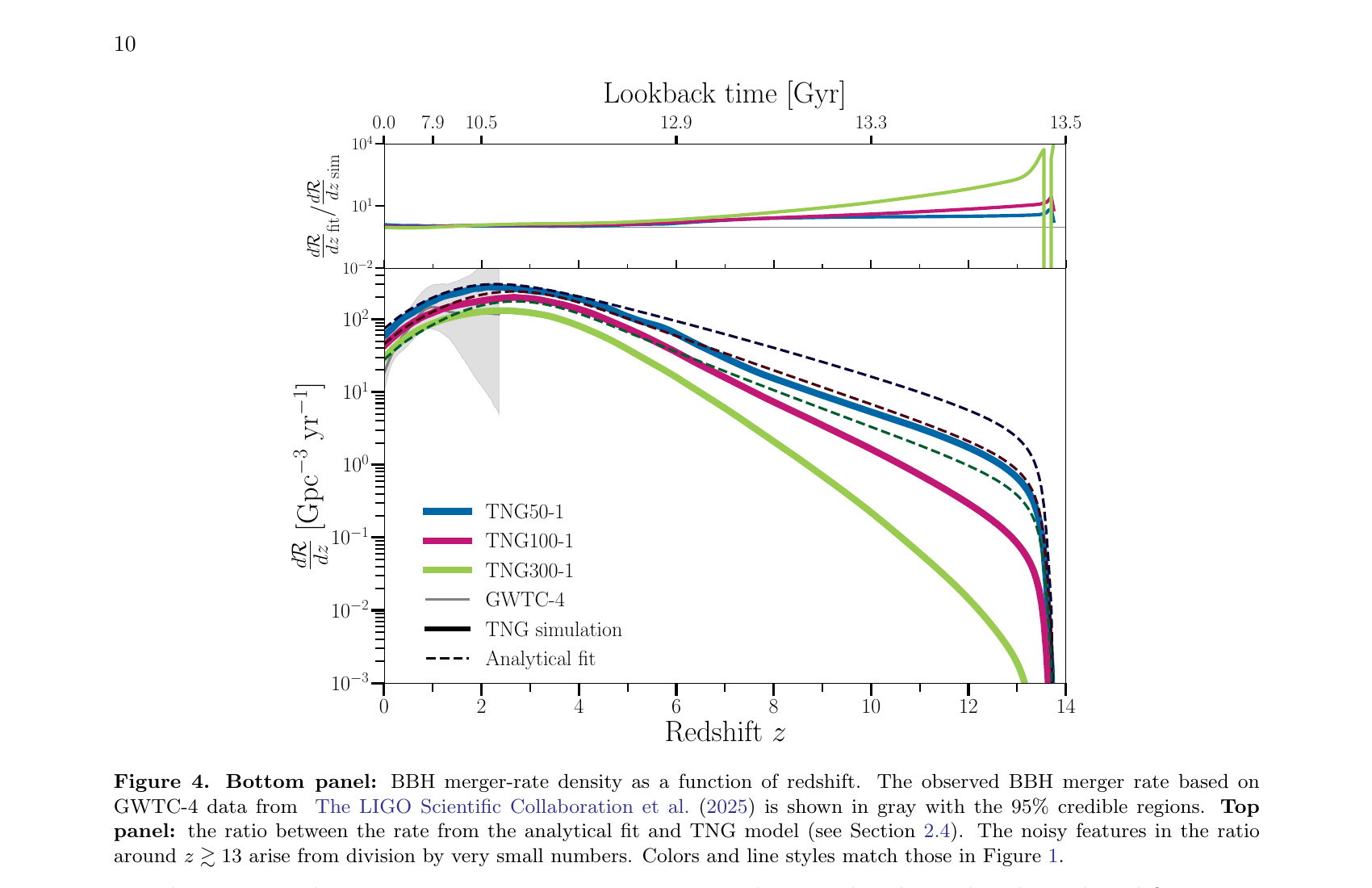
To predict how many binary black hole mergers gravitational-wave detectors like LIGO and Virgo should see, theorists must combine a model of how stars form across cosmic time — the star formation history (SFH) — with a model of how binary stars evolve into merging black holes. In practice, most studies use simple analytical SFH models (e.g., power laws or fits to galaxy survey data), but these are approximations of a far more complex underlying reality. This paper asks: how much does the choice of analytical SFH model actually matter?
The team uses the IllustrisTNG cosmological simulation as a ground truth for the star formation history and metallicity evolution of the universe, and compares it against four widely-used analytical SFH prescriptions. By running binary population synthesis models with COMPAS on top of each SFH, they quantify how the choice of SFH propagates through to predictions for BBH merger rates and mass distributions detectable by current and future gravitational-wave observatories.
A key finding (Figure 4 below) is that the predicted merger rate can vary by up to a factor of ~2–3 depending on which analytical SFH model is used, with the differences being most pronounced at high redshifts. This has direct implications for next-generation detectors like the Einstein Telescope and Cosmic Explorer, which will be sensitive to mergers across cosmic history. The metallicity evolution built into each SFH model is the primary driver of the spread: models that assign lower metallicities to star-forming gas at high redshift predict more BBH mergers because low-metallicity stars retain more mass and more readily form heavy black holes.
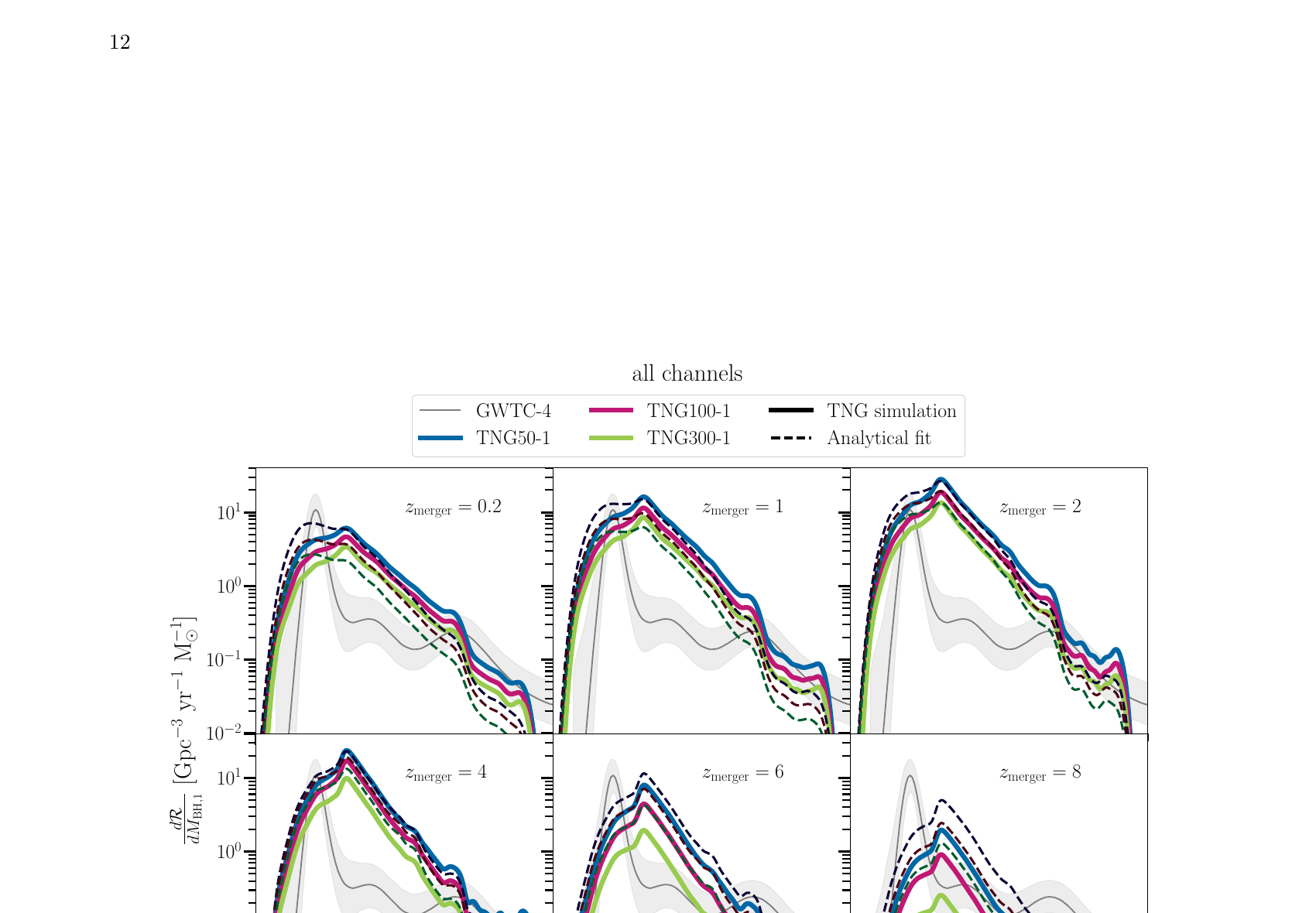
Figure 6 shows how the mass distributions of detectable BBH mergers shift depending on the SFH choice, with the IllustrisTNG-based prediction bracketed by the analytical models. The results underscore that SFH uncertainty is a non-negligible systematic in population-level gravitational-wave analyses — and that using cosmological simulations as a calibration anchor can help identify and bound this uncertainty.
Awards & grants
Click any entry to expand it.
NSF Award 2026 — WoU-MMA: The GRavitatiOnal-Wave Paleontology CataLog (GROWL): Breaking Simulation Silos To Study Compact Object Mergers Across Cosmic Time Aug 2026
National Science Foundation · Award #2606407 · Directorate for Mathematical and Physical Sciences, Division of Astronomical Sciences · Windows on the Universe (WoU-MMA) / Theoretical & Computational Astrophysics
Principal Investigator: Floor S. Broekgaarden (University of California San Diego)
$507,993 · October 1, 2026 – September 30, 2029 · [NSF award page]
Excited to share that our lab has been awarded an NSF grant for the GROWL project! The coming decade of gravitational-wave (GW) astronomy will transform our understanding of massive stars and compact objects — black holes and neutron stars. As detections from the currently operating LIGO–Virgo–KAGRA detectors, and from the next-generation observatories, grow from hundreds to thousands and eventually hundreds of thousands per year, we are entering an era of gravitational-wave "paleontology": using compact object mergers as fossil records of stellar evolution across cosmic time.
Yet the theoretical interpretation of these observations remains severely limited by what we have called "simulation silos" — models that differ in physical assumptions, data formats, and parameter coverage, which hinders meaningful comparison and reproducibility. This project establishes GROWL (GRavitatiOnal-Wave paleontoLogy CataLog): a unified, publicly accessible framework to standardize, compare, and visualize more than 10,000 models that investigate mergers of compact objects across cosmic time.
Concretely, GROWL will:
- Integrate existing simulations from leading population-synthesis codes (e.g. COMPAS, StarTrack, SEVN, POSYDON, BPASS, COSMIC);
- Quantify and visualize model-dependent uncertainties;
- Extend predictions through cosmic integration with metallicity-dependent star-formation histories;
- Quantify merger properties across cosmic time; and
- Release interactive visualization and analysis tools through the GW Landscape dashboard.
The aim is to enable transparent, quantitative comparisons across codes, physical assumptions, and evolutionary pathways. By systematically mapping model dependencies, GROWL will reveal which features of predicted GW populations — merger rates, delay times, mass distributions — are robust across models, and which instead reflect uncertain stellar-physics prescriptions. This framework connects stellar evolution to GW observations across redshift, and will help constrain processes such as common-envelope evolution, mass transfer, and supernova mechanisms. Its standardized data structure and metadata schema are designed to accelerate reproducible research, support machine-learning–based inference, and foster community collaboration across population-synthesis efforts.
The award also supports a substantial outreach component: hands-on demonstrations such as binary-evolution activities using scaled stellar models, "craft-your-own-compact-object" stations, and fabric spacetime demonstrations — featured at UCSD outreach events and in high school classrooms. These activities use storytelling and active learning to improve conceptual understanding and spark interest in science.